Chicago Public Schools Drops Crossing Guards Who Serve Only Private-School Students Amid Budget Gap
Facing a $734 million deficit, the district is cutting 102 crossing guard posts, about a third of which serve only private-school students, prompting objections from a South Side alderperson and a school board member.
By Ken Adams ·
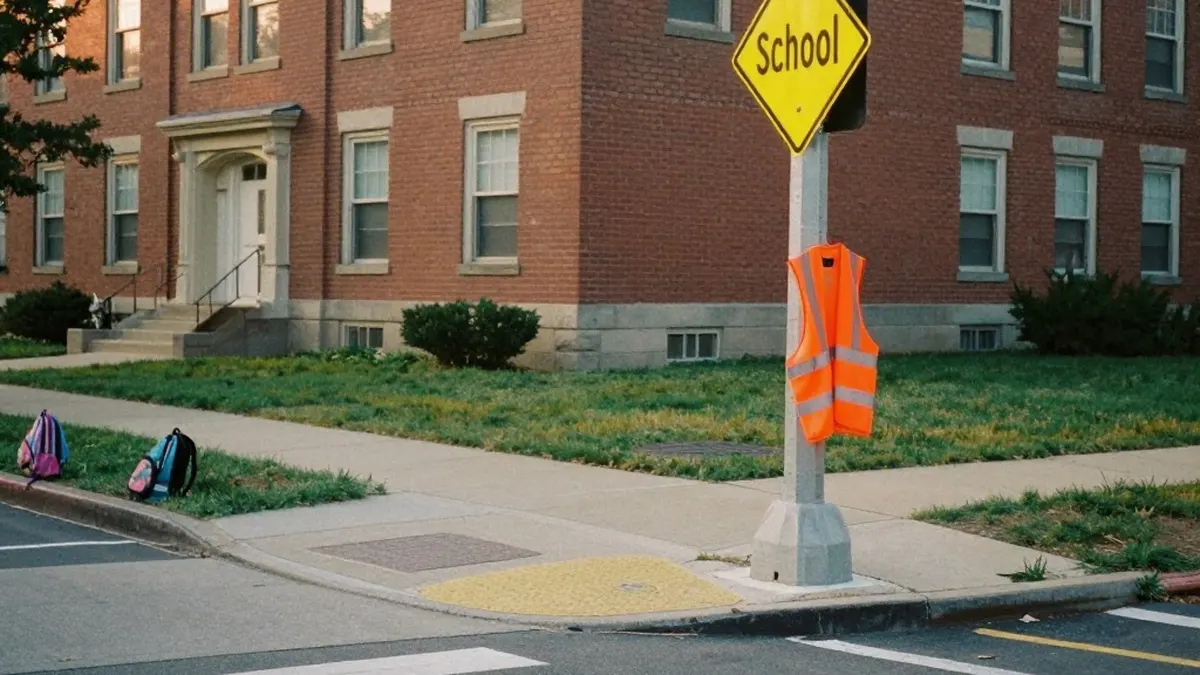
Chicago Public Schools is ending its practice of paying crossing guards for intersections used exclusively by private-school students, part of a broader effort to find savings as the district confronts a $734 million budget deficit.
In all, the district is eliminating 102 crossing guard positions, and roughly one-third of them serve only private-school students. CPS had 732 crossing guard posts last year. District officials say staffing crossings for private schools falls outside their core mission. They also noted that at least two of the guards were assigned to students at suburban Catholic schools.
To decide which posts to cut, CPS worked with the Illinois Department of Transportation. Officials chose locations used by few students or where Safe Passage workers could help children cross. No public school will lose all of its crossing guard posts, and guards will remain at 35 intersections that serve both public- and private-school students. Chicago has 268 private schools, according to the state, so not all of them had guards provided by CPS.
The change has angered Ald. Matt O'Shea, whose Southwest Side ward includes several Catholic elementary schools. Fifteen intersections in his area, half of all those covered, are being eliminated, including 11 used by private-school students. "Every taxpayer in the city of Chicago who has a child that attends a school, it doesn't matter if it's public, private or charter... all kids should be able to walk to school safely," O'Shea said.
He criticized how the decision was made, saying neighborhood school leaders, community leaders and elected officials were not consulted. He said he reached out to CPS leaders early last week after learning of the plans and has not received answers to his questions. He plans to meet with city and CPS officials, and last week he asked for an investigation into how the intersections were chosen and for City Council hearings.
The city ran the crossing guard program until 2021, when then-Mayor Lori Lightfoot shifted its cost to CPS. She described the move as a step toward separating the district from the city as it transitioned to an elected school board, and it also helped her balance the city's budget. The program cost $16.6 million at the time of the transfer, and CPS had planned to spend $18.4 million on it last year. The district did not say how much the cuts would save. Chief Operating Officer Charles Mayfield acknowledged that, against a $10 billion budget, the savings will not be significant, but said every dollar counts. He also pointed out that CPS does not provide support services such as meals or custodians to private schools.
Mayfield contacted the Archdiocese of Chicago, which oversees the affected Catholic schools, before announcing the decision. He offered to keep managing the guards if the archdiocese pays for them, and said the district would help train volunteer crossing guards. The archdiocese declined to answer specific questions but said in a statement that it has a "good working relationship with CPS." It added: "We are concerned these cuts could endanger the safety of some children. If cuts must be made, we believe they should be based on safety criteria, not the type of school a child is headed to."
O'Shea doubted that volunteers could be properly trained in the few weeks before classes begin. "What volunteers are you going to train and put out in just a few weeks?" he asked, warning that something terrible could happen at one of the crossings that previously had a guard.
Chicago Board of Education member Therese Boyle, the elected representative for the district that includes O'Shea's ward, agreed and urged that the posts be kept until CPS presents a replacement plan. She said she learned of the effect on her district last week and has not yet reviewed the IDOT data used to choose the cuts. "I don't know how the decisions were made," she said. Boyle also expects to join the meeting with city and CPS officials, and noted that parents of private-school students pay property taxes that help fund CPS and wonder why they cannot receive a small share to help their children cross the street safely.
Source: Chicago Sun-Times